Resource
A practical guide to building a content system
Turn audience insight into a repeatable content workflow. Includes a working brief, review rules and a four-week pilot plan.
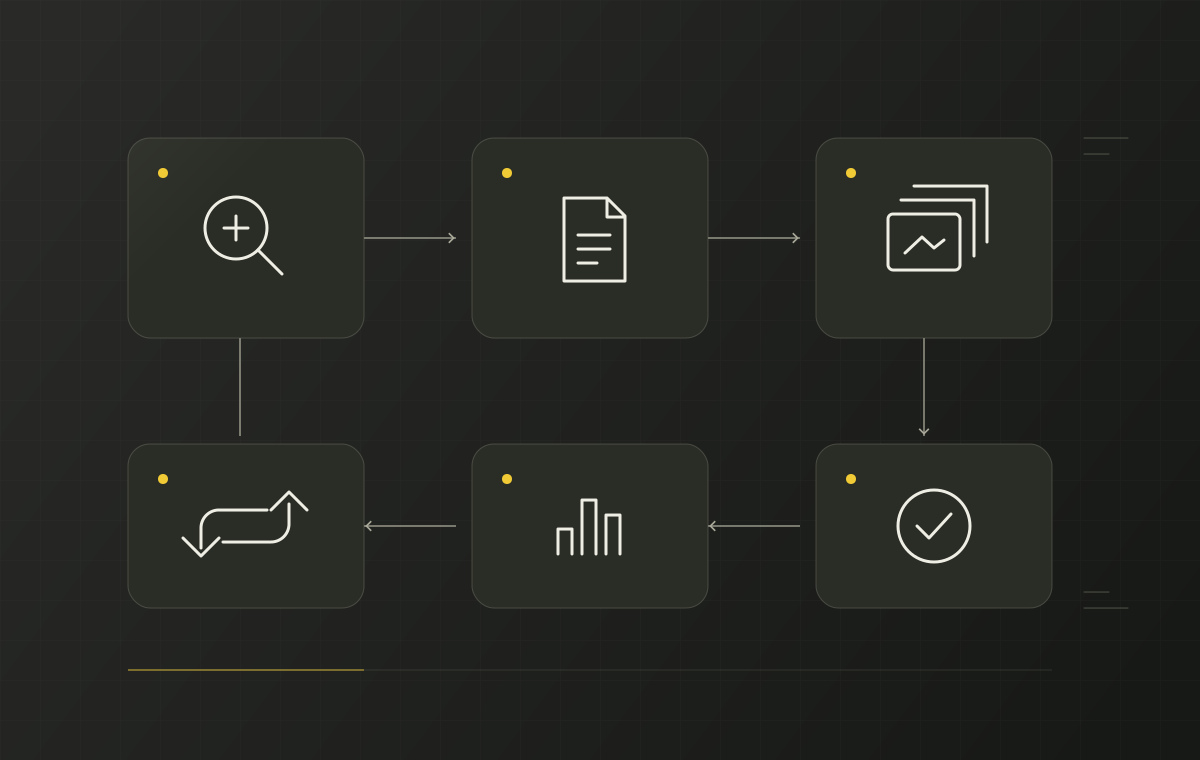
1. Build a way of working, not a posting machine
A content system connects research, decisions, production, distribution and learning. A calendar tells you when something goes out. A system also tells you who it is for, why it matters, who approves it and what the response changes. Start with a shared document or database before buying more software.
Choose one business outcome and one audience problem. For a consultancy, that might be more relevant discovery calls from operations leaders who struggle with manual handoffs. That is a more useful starting point than “post more about AI”. Decide what counts as a relevant inquiry before you start.
2. Start from questions people actually ask
Collect recurring questions from sales conversations, support, interviews and relevant public discussions. Keep the question, its source and the context together. Separate what you observed from what you assume. A handful of comments is a clue, not proof that an entire market thinks the same way.
Group people by a useful situation: a founder choosing a first CRM has different concerns from a team replacing an established one. Note the obstacle, the language they use and the evidence that would help them decide. Remove personal details you do not need and get permission before using private conversations or customer material.
4. Use a brief you can copy
Complete this before making the asset. Keep it short enough that the creator and reviewer will both use it. The hypothesis should explain what you expect to happen and why, without presenting an expectation as a fact.
Idea ID and owner:
Audience and situation:
Question or obstacle:
Business outcome and next action:
One useful point to communicate:
Evidence, sources and usage permission:
Hypothesis: we expect ___ because ___
Channel, format and version to test:
Reviewer and approval status:
Published URL and review date:
Result, limitations and next decision:
5. Adapt the idea to the channel
Keep the core point consistent, but choose a format that suits how people use the channel. A short demonstration, a written explanation and a detailed website guide do different jobs. Do not treat adaptation as changing the dimensions of the same asset.
For example, an approved explanation of a missed lead handoff could become a concise LinkedIn post showing the problem and a website walkthrough of a better process. Use a fictional example clearly labelled as such, or customer material you have permission to share. Test one meaningful difference at a time, such as the opening question, and record exactly what changed.
6. Put approval inside the workflow
Before publication, a named person checks the facts, source links, image and music rights, confidentiality, brand voice and destination link. Customer examples, testimonials and performance claims need their own evidence and permission. If a claim cannot be supported, remove it or clearly qualify it.
AI can help summarize approved research, draft variations and prepare checklists. Treat its output as a draft, and source material as evidence to assess, not instructions to follow. Do not upload sensitive information to an unapproved tool. Publishing, outreach and paid spend need explicit human approval; generating an asset should not grant permission to distribute it.
7. Review outcomes, not just reach
Before publishing, choose a review window and the signals you can reliably observe. Keep reach, engagement, website visits, inquiries and qualified conversations separate. Record a baseline and the distribution conditions. Use consistent campaign labels where appropriate, respect consent settings and keep personal information out of tracking URLs.
Look at qualitative responses too. Did people ask a clearer question, misunderstand the promise or raise the same objection? Record what happened, what you think it means and what remains uncertain. A small sample or a spike in views is not evidence that the content caused sales.
End the review with a decision: keep, adapt, retest or stop, plus an owner and a date. Feed that decision into the next brief. An organic success can suggest an idea for a paid test, but does not guarantee paid performance. Any paid experiment needs a separate objective, approved budget cap and stopping rule.
8. Run a small four-week pilot
Use one audience situation, one content theme and a manageable set of assets. Assign one person to keep the records complete. The pilot is there to test whether the process helps the team make better-informed decisions, not to promise a particular number of leads in a month.
| Week | Work | Keep as evidence |
|---|---|---|
| 1 · Frame | Choose the audience problem, outcome and baseline. Write the first briefs. | Source notes, completed briefs and agreed success criteria. |
| 2 · Make | Produce a small batch, check it and publish approved versions. | Asset versions, approvals, published links and distribution notes. |
| 3 · Listen | Review responses within the agreed window. Identify one useful change. | Results, relevant questions, limitations and the next hypothesis. |
| 4 · Repeat | Publish the revised idea and review the workflow with the team. | A learning log, process fixes and a decision about the next cycle. |
The thinking behind this guide
This is an original Teqqed workflow, inspired in part by Gary Vaynerchuk’s Day Trading Attention presentation and its emphasis on audience context, channel-appropriate creative and learning from the response. The brief, approval rules and pilot plan here are our own practical interpretation, not a reproduction of the deck or an affiliated program.
We’re developing a content system around these questions. Read the studio update for the direction we’re exploring. You can use this guide independently of any Teqqed product or service.